Climate change isn’t just some distant threat—it’s here, reshaping lives right now. In early 2026, we’re seeing headlines that feel almost surreal: the U.S. rolling back key regulations that once treated greenhouse gases as a public health danger, while record ocean heat and accelerating warming push us closer to tipping points. I’ve followed this issue for years, and it’s heartbreaking to watch progress stall in some places while the planet keeps heating up. But amid the bad news, there are real stories of resilience and innovation that give hope. This article dives deep into what’s happening with climate change today—its causes, impacts, latest developments, and what we can actually do about it.
What Is Climate Change, Really?
Climate change refers to long-term shifts in temperature, precipitation, and other atmospheric patterns, largely driven by human activities since the Industrial Revolution.
Unlike day-to-day weather, which can swing wildly, climate looks at averages over decades. The burning of fossil fuels has loaded the atmosphere with greenhouse gases, trapping heat like a blanket that’s gotten way too thick.
The Current State of Climate Change in 2026
As of February 2026, the world is grappling with accelerated warming. 2025 ranked among the hottest years on record, even during a La Niña phase that typically cools things down. Global temperatures hover around 1.4°C above pre-industrial levels, with oceans absorbing unprecedented heat—equivalent to massive energy bombs detonating underwater every second.
Recent policy shifts, like the U.S. EPA’s repeal of the 2009 endangerment finding, have sparked debate. Critics argue it endangers lives by loosening limits on emissions, while supporters see it as reducing regulatory burdens. Meanwhile, China shows signs of peaking emissions earlier than expected, thanks to massive renewable growth.
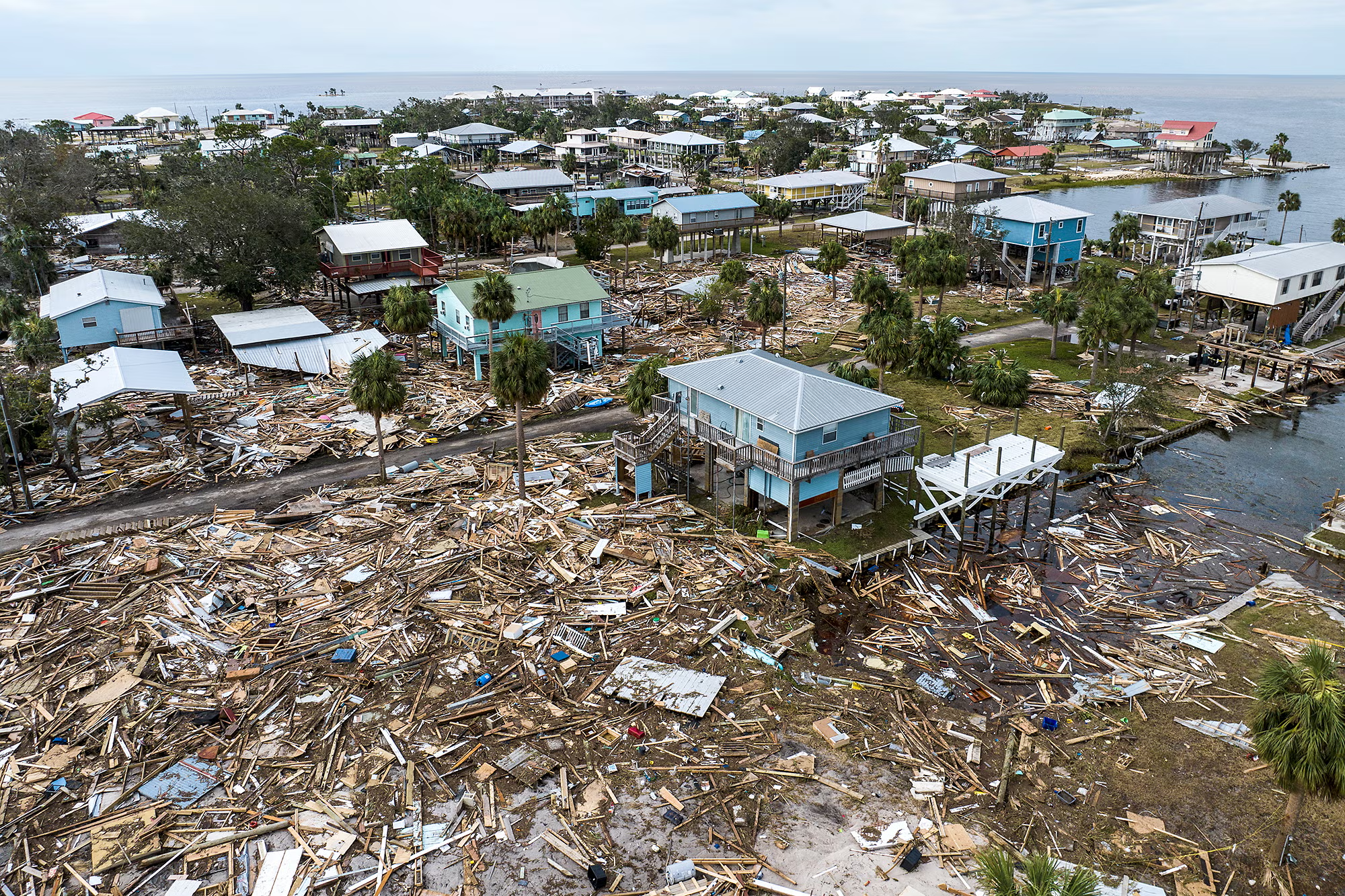
Extreme weather tied to these changes—intensified storms, droughts, floods—hit communities hard last year, from shrinking rivers in the American West to deadly heatwaves elsewhere.
I remember talking to a farmer in Punjab a while back who said his crop cycles are all off now—monsoons arrive late or dump too much too fast. It’s not abstract science; it’s daily survival.
Main Causes of Climate Change
Human activities remain the dominant driver, with fossil fuels accounting for the lion’s share.
- Burning coal, oil, and gas releases CO₂ and methane.
- Deforestation reduces nature’s ability to absorb carbon.
- Agriculture and industrial processes add nitrous oxide and methane.
Atmospheric CO₂ levels exceed 425 ppm, unseen in millions of years. Natural factors like solar cycles play minor roles, but data shows human influence dominates recent trends.
Key Effects of Climate Change
The impacts are widespread and compounding.
Rising temperatures fuel more intense heatwaves, wildfires, and storms. Sea levels continue climbing from melting ice and thermal expansion, threatening coastal cities. Ecosystems shift—glaciers vanish, species migrate or disappear.
Human health suffers too: more heat-related illnesses, spread of diseases like malaria into new areas, and food insecurity from disrupted agriculture.
In 2025, disasters cost billions and displaced millions. One study noted oceans hit record heat content, amplifying hurricanes and marine die-offs.
It’s emotional—watching coral reefs bleach or polar bears struggle hits hard, reminding us we’re part of this web of life.
Latest News and Developments in Climate Change
Headlines in early 2026 highlight mixed signals.
The Trump administration’s moves to revive coal and erase certain climate rules mark a major rollback, drawing criticism for ignoring evidence of health risks from warming. Europe warns of preparing for up to 3°C heating, calling it “daunting but doable.”
On brighter notes, reports suggest China’s emissions may peak sooner, driven by clean energy dominance. Global renewables surge, though not fast enough to meet Paris goals.
Scientists warn of tipping points—like Antarctic ice loss or Amazon dieback—getting closer, potentially locking in “hothouse” conditions.
A personal reflection: seeing youth activists push forward despite setbacks inspires me. Their energy counters the fatigue many feel.
Solutions and Mitigation Strategies
We know what works—rapid emissions cuts, scaled renewables, and nature-based solutions.
Transitioning to solar, wind, and efficiency can slash emissions while creating jobs. Carbon pricing, reforestation, and tech like direct air capture offer paths forward.
Individual actions add up: reducing meat consumption, efficient transport, supporting green policies.
Pros and Cons of Major Solutions
- Renewable Energy Shift
- Pros: Lowers emissions, cheaper long-term, energy independence.
- Cons: Upfront costs, intermittency needs storage, land use concerns.
- Carbon Capture and Storage
- Pros: Tackles hard-to-abate sectors, potential for negative emissions.
- Cons: Expensive, energy-intensive, not yet scaled.
- Nature-Based Solutions (e.g., Reforestation)
- Pros: Restores biodiversity, co-benefits like water regulation.
- Cons: Land competition, risks from fires or droughts.
International cooperation through agreements like Paris remains crucial.
Comparison: Current Policies vs. Needed Action
Many nations aim for net-zero by mid-century, but current trajectories point to 2.3–2.8°C warming.
The gap is stark: emissions must drop 55% by 2035 for 1.5°C chances. Progress in renewables is good, but fossil fuel reliance persists.
People Also Ask (PAA) Section
What is the main cause of climate change?
Primarily human emissions of greenhouse gases from fossil fuels, deforestation, and industry—backed by overwhelming scientific consensus.
Is climate change accelerating in 2026?
Yes, recent data shows faster warming, with record heat despite cooling influences like La Niña, and weakening natural carbon sinks.
What are the effects of climate change on humans?
Increased extreme weather, health risks from heat and disease spread, food and water shortages, and economic losses from disasters.
Can we stop climate change?
We can’t reverse all damage, but aggressive cuts to emissions and adaptation can limit worst outcomes and protect future generations.
How does climate change affect Pakistan or Lahore?
Rising temperatures intensify heatwaves, alter monsoons, threaten glaciers feeding rivers, and increase flood/drought risks in Punjab.
FAQ
What is the difference between weather and climate?
Weather is short-term (daily rain or sun); climate is long-term patterns averaged over 30+ years.
How do we know humans cause climate change?
Isotope analysis, satellite data, and models show natural factors alone can’t explain observed warming—human greenhouse gases match the pattern.
What can individuals do right now?
Cut energy use, choose sustainable transport, eat more plant-based, vote for climate policies, and support green businesses.
Are renewables enough to solve it?
They’re essential but need pairing with efficiency, storage, grid upgrades, and reduced demand for full impact.
What’s the latest on global temperature goals?
Paris aims for under 2°C, ideally 1.5°C—we’re on track for overshoot without massive acceleration in action.
Climate change feels overwhelming, but every step counts. From policy wins in clean energy to personal choices, we build momentum. The stories of communities adapting—farmers switching crops, cities greening—show humanity’s resilience. Let’s keep pushing, because this planet is worth it.